Ukilu POS at Twilio SIGNAL Sydney 2026: What It Means for Salon Messaging
On 27 October 2026, Ukilu POS joined Twilio SIGNAL World Tour Sydney at ILUMINA, 1 Elizabeth Street. SIGNAL is Twilio's one-day forum on the future of customer engagement. This year's message was clear: AI agents are moving out of the lab and into everyday conversations over SMS, email, chat and voice, and businesses now expect them to deliver results they can measure.
We went because Twilio already sits behind many of the messages Ukilu sends every day. For the salons, spas and cafés that use Ukilu, those messages are not a side feature. They are how a client remembers an appointment, finds a receipt, or comes back for their next visit. Here is our walk through the day, session by session, and what each part means for small service businesses.
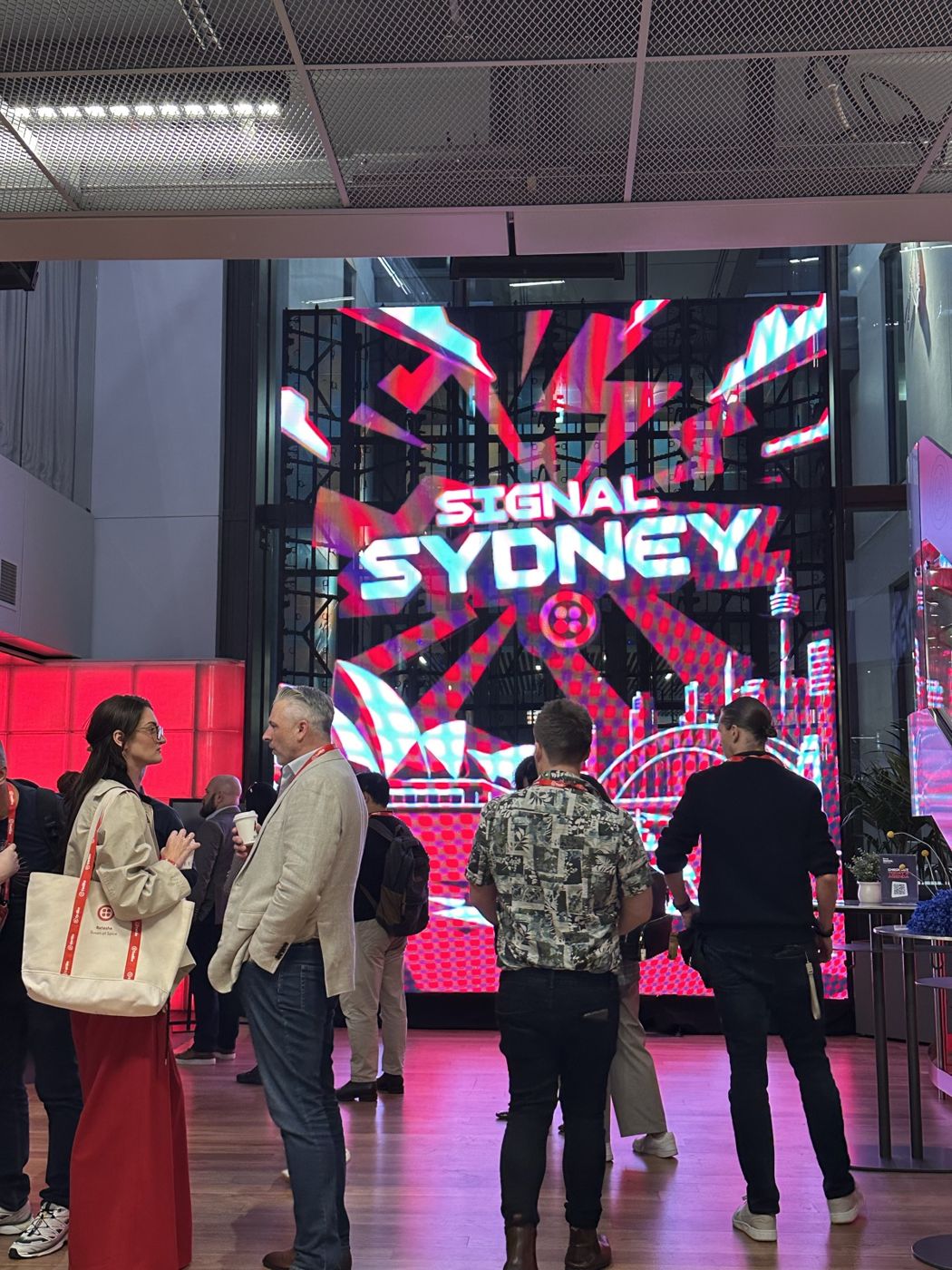
The SIGNAL Sydney welcome screen in the foyer at ILUMINA.
How Ukilu uses Twilio today
Ukilu is booking and POS software for service businesses in Australia. When a shop sends a message to a client from Ukilu, it goes out through Twilio:
- SMS through Twilio. Booking confirmations, appointment reminders, birthday messages and marketing texts. Each message carries an opt-out link, so clients stay in control of what they receive.
- Each shop's own SMS sender name. A salon can send texts under its own name instead of a random number. Ukilu prepares the registration with Twilio so it meets Australia's sender ID rules.
- Email through Twilio SendGrid. Receipts, gift card and voucher emails, consent form copies, daily statements and shop email campaigns.
The shop writes the message in Ukilu, and Twilio delivers it reliably at scale. That is why the roadmap Twilio shared at SIGNAL matters to us: it shapes what we can build for salons next.
9:00 AM · Fuel and connection
The day opened with registration, coffee and networking in the foyer. The room brought together developers, product teams and customer experience leaders, all there for one question: how to put AI to work in real customer conversations.
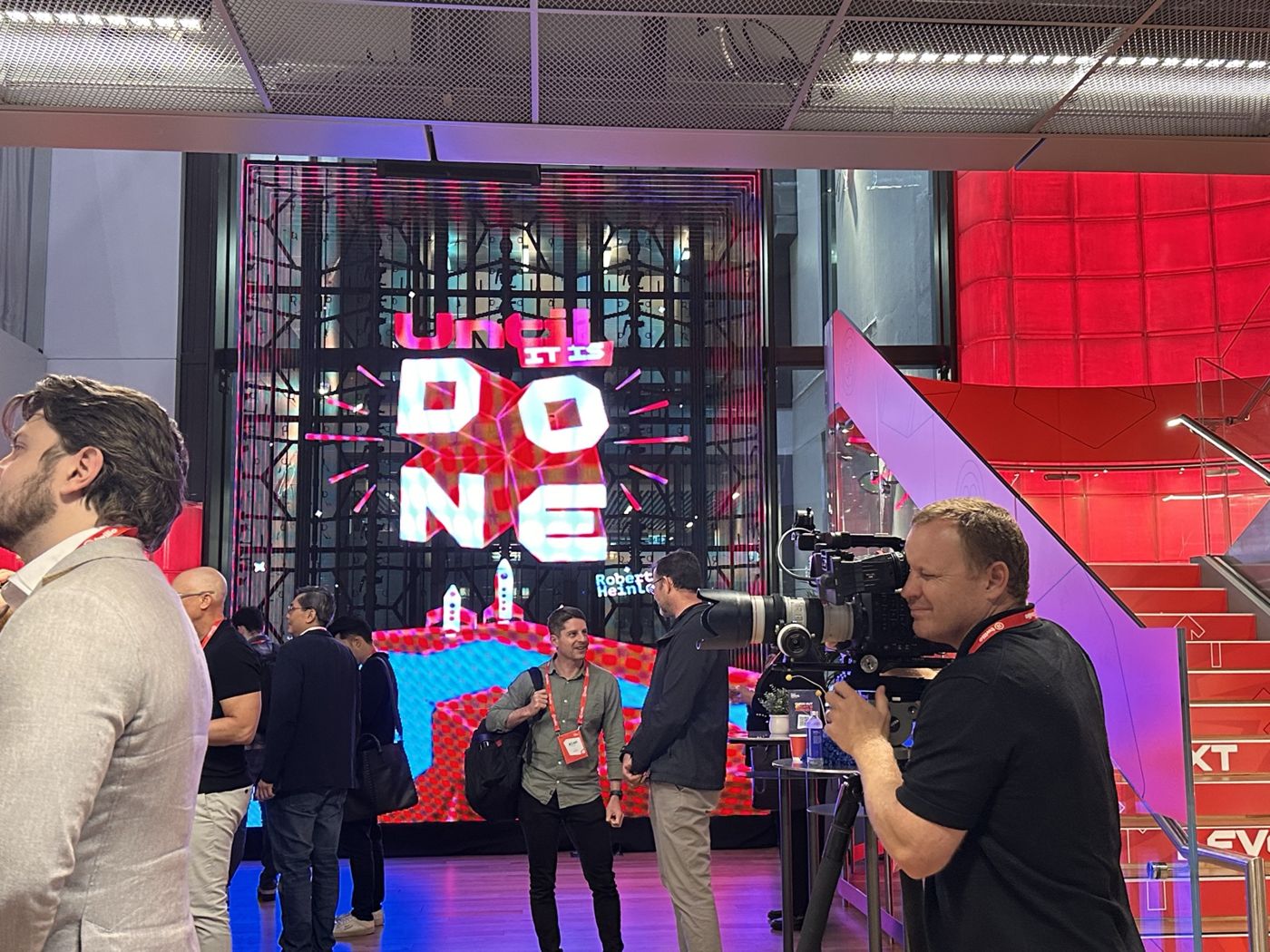
Morning networking before the keynotes.
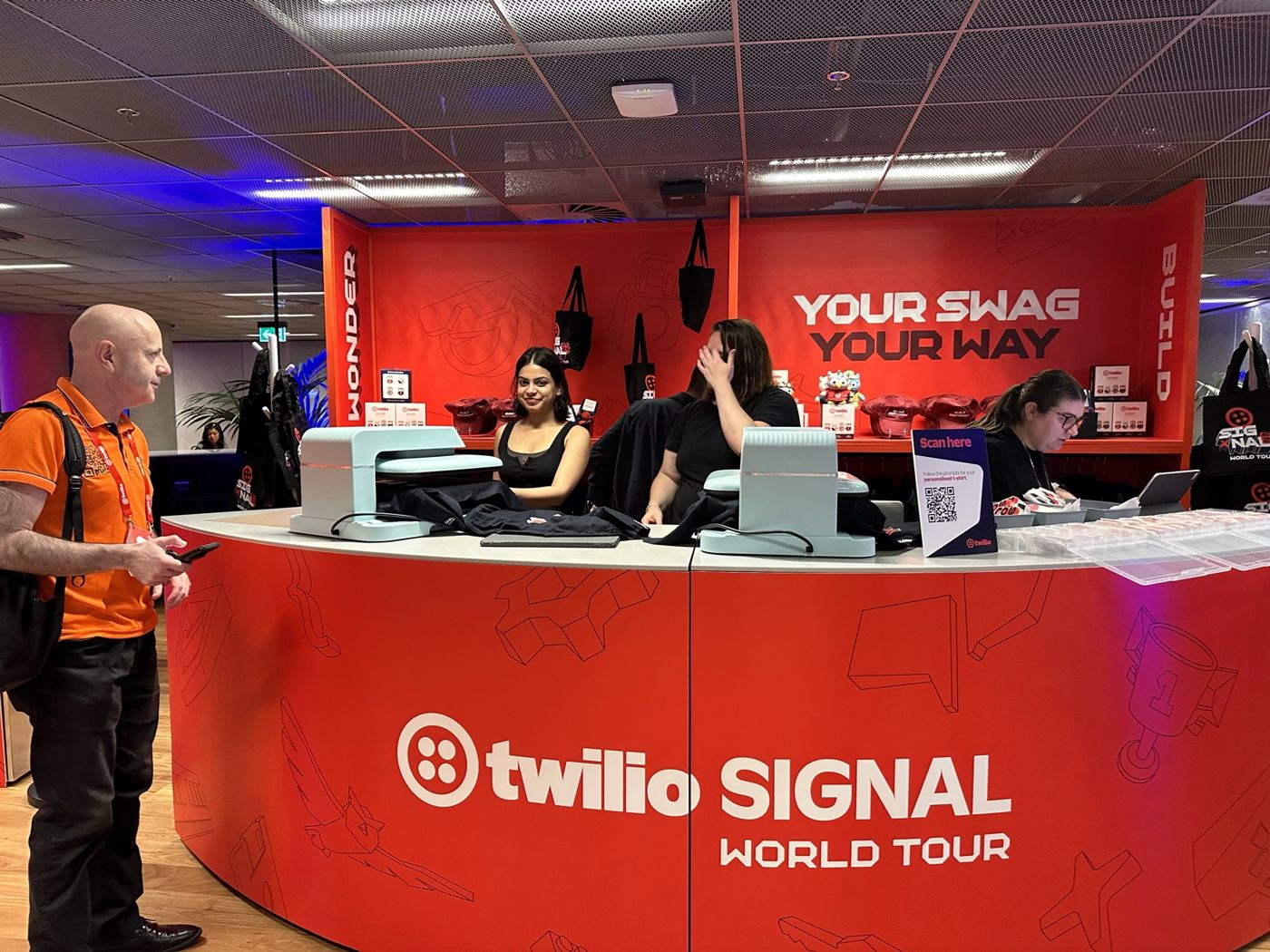
The Twilio SIGNAL World Tour desk, where every attendee could pick their own swag.
9:30 AM · Visionary Keynote
Chris Koehler, Chief Marketing Officer at Twilio, opened the main stage with Twilio's platform vision, joined by Vincent Wong, Head of Product at Atlassian. The keynote mixed product launches with live engineering demos and Atlassian's approach to design: building software that feels simple and even delightful, while still handling demanding, real-world workflows.
Our takeaway: the best tools hide their complexity. A salon owner should never have to think about how a reminder is delivered, only that the client turns up.
10:00 AM · Builder Keynote
The Builder Keynote went behind the scenes of the Twilio platform with Kathryn Murphy (SVP, Product), Christopher Connolly (Director, Solution Engineering) and Courtney Harland (Principal Solutions Engineer). The centre of it was Twilio's new conversation layer, a set of products that work together under every channel:
- Conversation Orchestrator brings a customer's messages across voice, SMS, WhatsApp, RCS and chat into one thread, and manages the handoff between AI agents and people.
- Conversation Memory builds one customer profile from past conversations and customer data, made for AI to use, so a customer never has to repeat themselves.
- Conversation Intelligence analyses conversations as they happen to pick up changes in sentiment, flag escalations and trigger actions mid-conversation.
- Conversation Relay is Twilio's voice AI product for natural, real-time phone conversations.
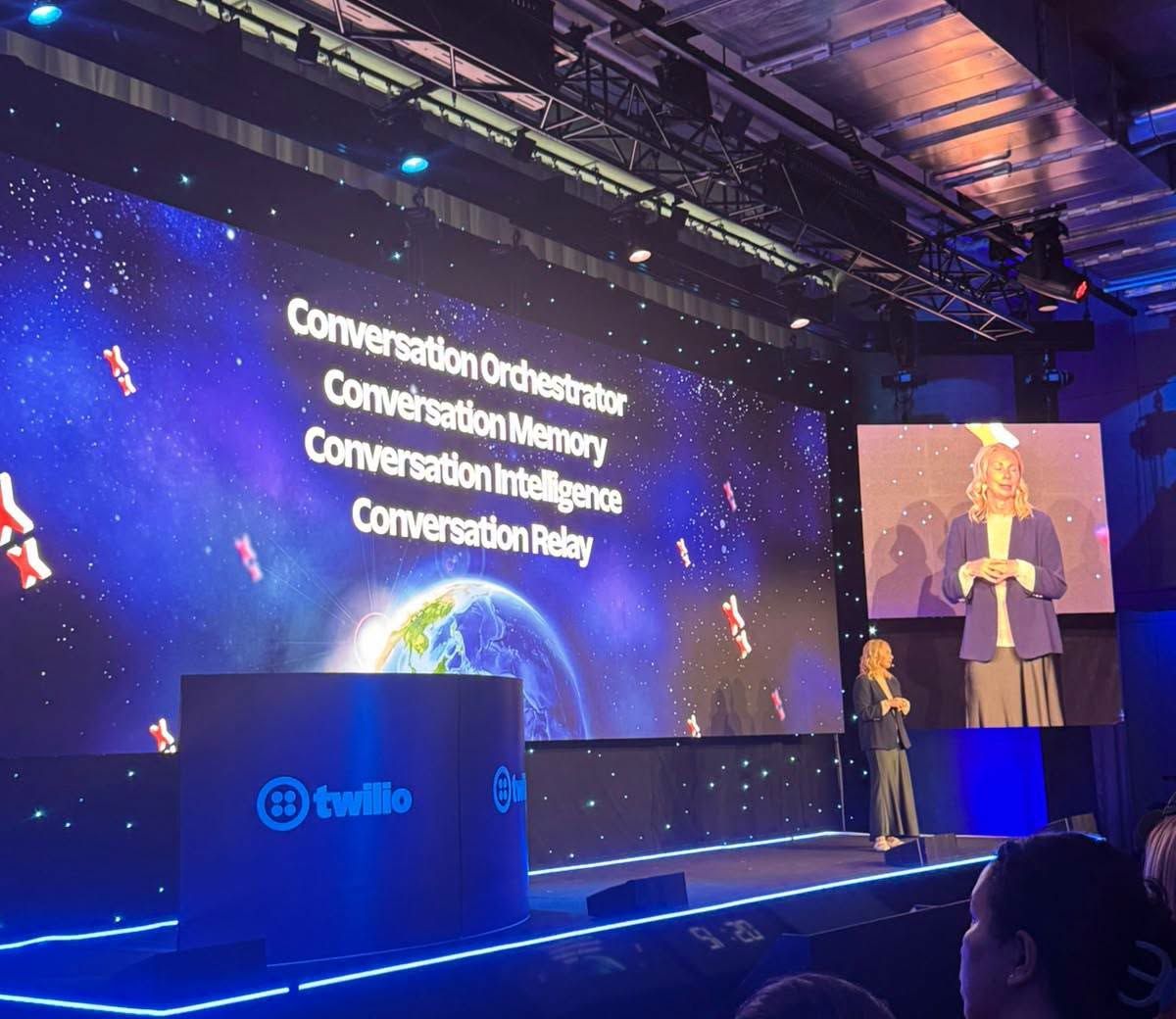
Twilio's conversation layer on the main stage: Orchestrator, Memory, Intelligence and Relay.
The keynote also announced Enterprise Knowledge as generally available. It lets AI agents answer from a business's own trusted information, such as FAQs, policies and product documents, instead of guessing.
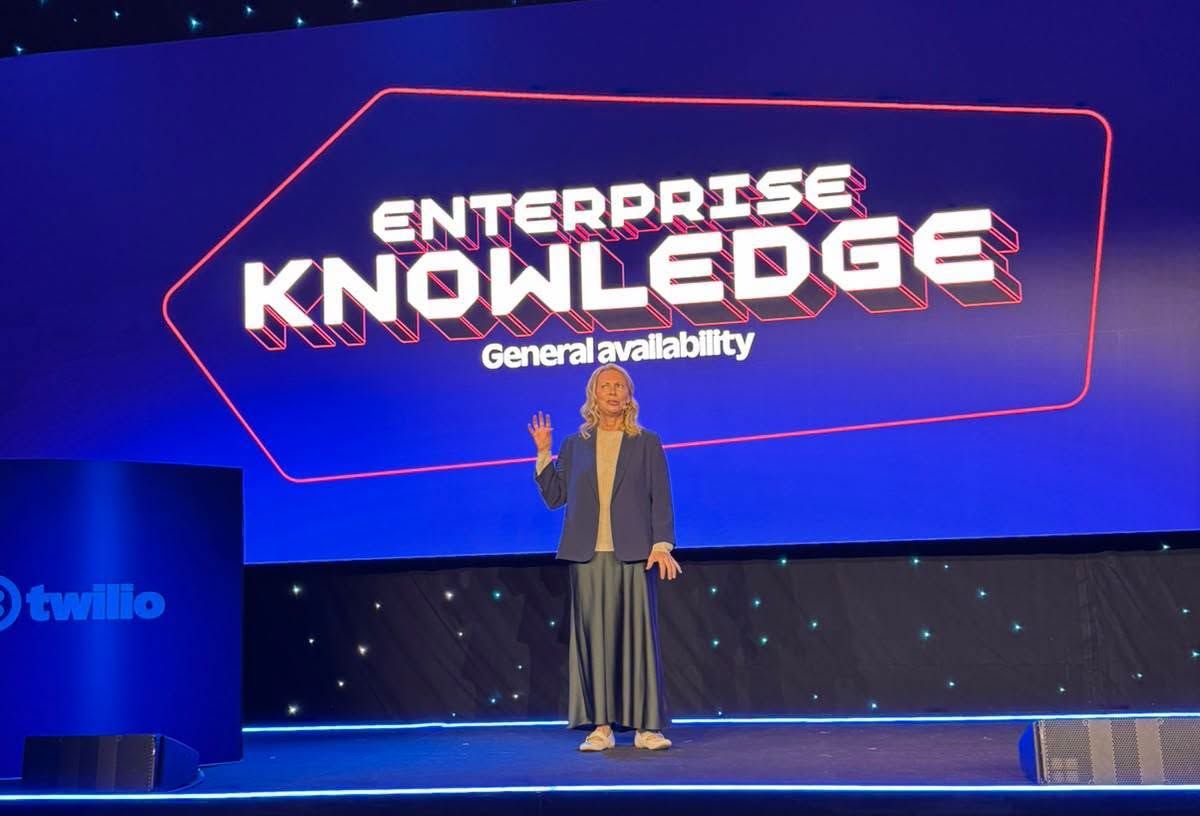
Enterprise Knowledge, now generally available.
Our takeaway: for a salon, "enterprise knowledge" is the price list, opening hours, cancellation policy and aftercare notes. An assistant that answers only from that information, and hands over to a person when it can't, is far more useful and far safer than a generic chatbot.
11:00 AM · Headliner Keynote: Supercharge Today, Reimagine Tomorrow
Dawid Naude, Chief AI Officer at Affinda, gave a story-driven talk on how AI is changing industries right now, with case studies and live demos. The focus was practical: helping leaders move from talking about AI to acting on it.
Our takeaway: for small businesses, the right first step with AI is usually small and specific, such as answering the same five questions clients ask every day.
1:00 PM · Afternoon sessions
After lunch, the program split into parallel sessions for builders and business leaders.
Build multichannel AI agents with Twilio Agent Connect
Michelle Duke, Developer Evangelist at Twilio, introduced Twilio Agent Connect, an open-source toolkit for Python and TypeScript that connects AI agents built on any model or framework to Twilio's Conversation Orchestrator and Conversation Memory. The session showed how to give an agent custom tools, let it look up what it remembers about a customer, and hand the conversation to a person when needed.
Use case spotlight: Xero
Vladka Kazda, Global EGM/SVP Customer Engagement at Xero, and Twilio's Christopher Connolly showed how Xero picks up conversations that have stalled. When a customer doesn't act on a reminder email, Xero's AI agents can continue the conversation in another channel, using Twilio Segment for the customer profile and the trigger, and Twilio channels for the conversation itself. Ukilu connects with Xero too, so this one was close to home.
The agentic experience roadmap (invite only)
Led by Seth Familian, RVP Enterprise Strategy at Twilio, this invite-only session compared legacy workflows with agentic designs, followed by a roundtable for senior executives on how to get real value from AI, not just hype.
Real-time intelligence and observability for conversations
Des Hartman, Solution Acceleration Architect for APJ at Twilio, showed how to set up real-time rules and webhooks with Conversation Intelligence, and how to trace what Conversation Memory is doing from end to end. When AI talks to customers, being able to see and check what it did is essential.
Change at scale: how nbn keeps customer experience intact
In a fireside chat, Ajay Manchandani, Executive Manager at nbn, and Twilio's Fabrizio Capodicasa discussed keeping customer experience connected across retail providers and field teams, from first contact to ongoing support, while the systems underneath are being rebuilt.
Your first Twilio voice agent, live
Yann Burden, ANZ Deployment Lead at ElevenLabs, built voice agents live on Twilio phone numbers, one using Media Streams and one using ElevenAgents with Eleven v4 Turbo, plus a Twilio number connected to an Eleven Realtime agent. The session ended with a practical checklist for taking a voice agent from demo to a real contact centre.
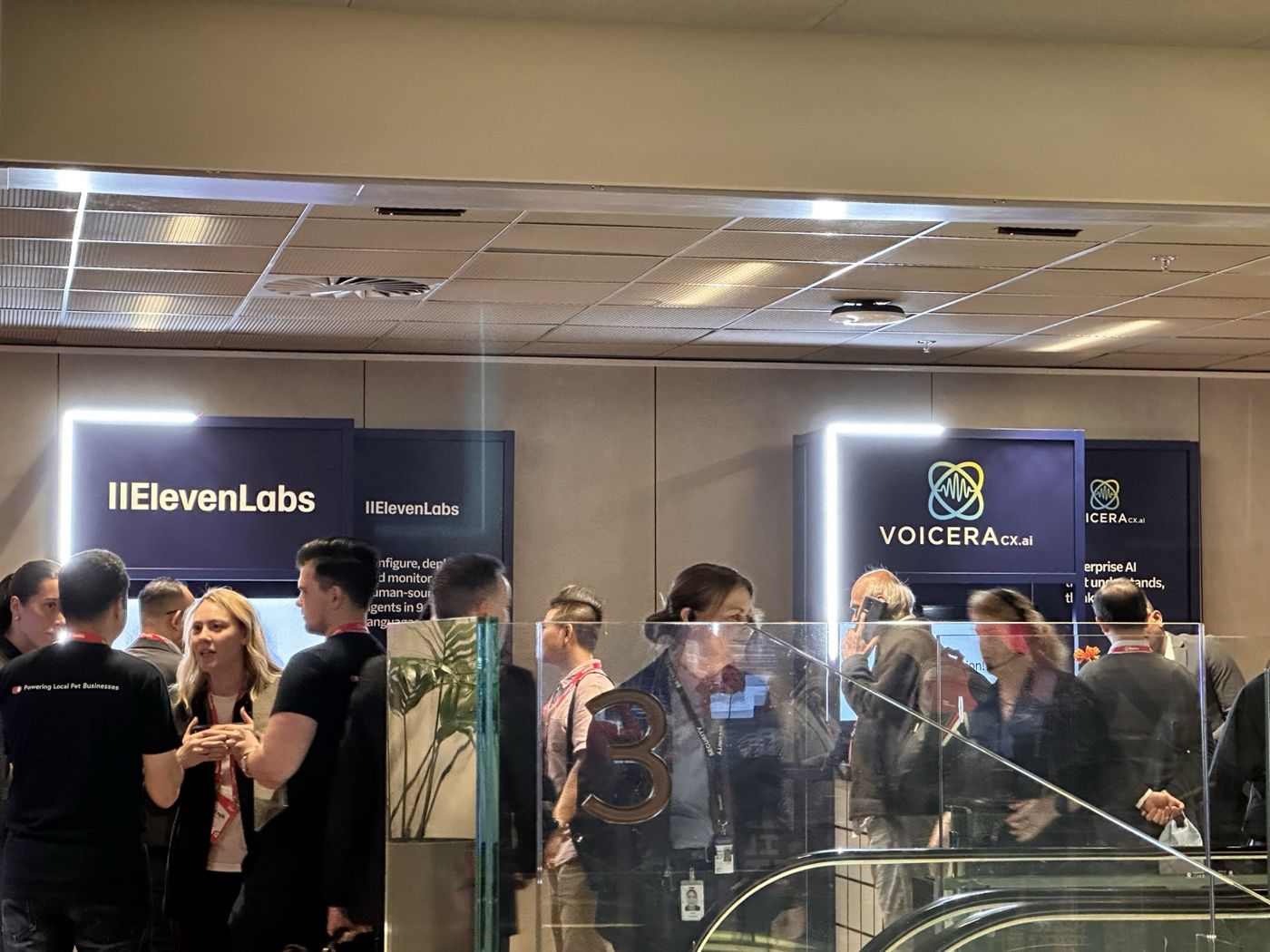
Partner booths, including ElevenLabs, between sessions.
2:50 PM · Escaping pilot purgatory
A panel with Shanique Busby (Consultant), Simon Kriss (CEO, Sovereign Australia AI) and Twilio's Nicholas Kontopoulos (VP, Head of Marketing, APJ) tackled why so many AI projects never get past the pilot stage. The panel covered how fast data needs to move, local regulation across Asia Pacific, handing conversations to human staff at the right moment, and connecting AI securely to back-end systems.
Our takeaway: the hard part of AI is not the demo. It's privacy, clear handoffs and connecting to real data, the same things we already take seriously with client records and consent forms in Ukilu.
3:20 PM · The Architecture of Wonder
Nicholas Kontopoulos closed the main program with a talk on leadership: how to build organisations that can turn complex technology into customer experiences that feel smooth and simple.
3:40 PM · The Builder Hub
The day finished with an interactive reception at the Builder Hub and Builders Bar, with product test-drives, Twilio's technical experts on hand to answer questions, and drinks and food.
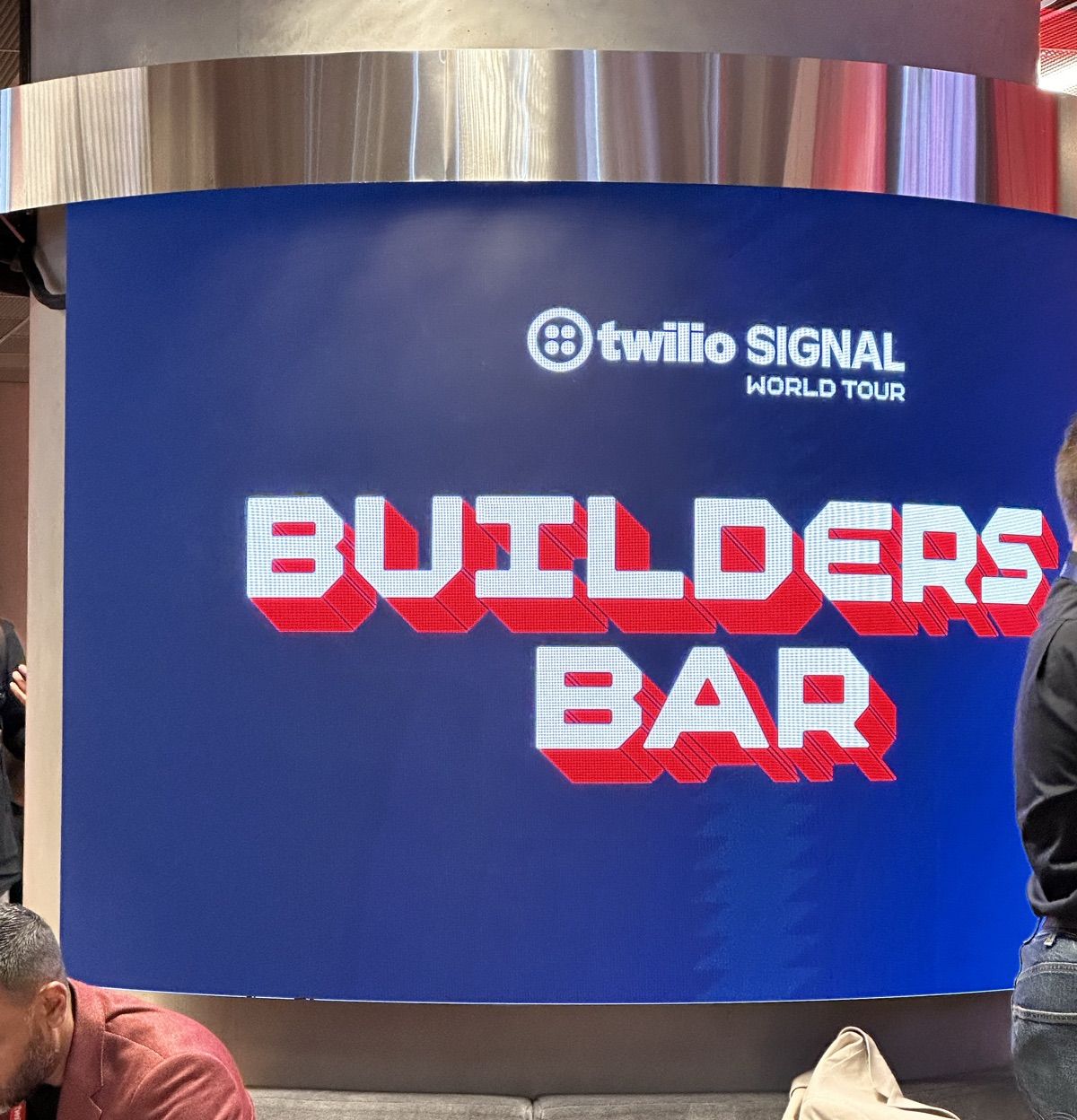
The Builders Bar, where the day wrapped up.
What this means for salons
A salon front desk is one of the busiest places in any small business. The phone rings while the owner is mid-service, a client texts to move a booking, and another asks about prices after hours. Most of these conversations are simple, but they still take time.
What we saw at SIGNAL points to a future where routine questions such as "Do you have a spot on Saturday?" or "Can I move my appointment?" get a fast, accurate reply at any hour, using the shop's real calendar and policies, while anything that needs a person goes straight to the team. We are looking carefully at how this can work inside Ukilu, with the shop always in control of what is sent in its name.
Our approach will stay the same as it has always been: build it into the tools salons already use, keep it simple to switch on, and never send a message a client didn't agree to receive.
Thank you, Twilio
Thank you to the Twilio team for an excellent day in Sydney, and to everyone we met. If you'd like to talk about salon messaging, booking or payments, we'd love to hear from you. Contact our team or email [email protected].
New to Ukilu? See how SMS reminders help reduce no-shows, or explore all Ukilu features.